Search Engine Results Pages (SERPs) are changing fast. In 2025 and beyond, brands will need to adapt to a smarter, AI-powered Google experience that is reshaping how users interact with organic listings and paid placements.
What Do Modern Search Results Look Like?
Today’s search results combine traditional organic results with AI-generated content and interactive elements such as:
AI Overviews: These are automated, AI-generated summaries that appear directly within search results, providing quick answers or key points from multiple sources.
Featured Snippets: Short, clear answers highlighted at the top of search results, often drawn from well-structured content (such as lists, tables, or short paragraphs) from authoritative web pages.
People Also Ask (PAA): Expanding boxes within search results displaying related questions and answers. The selection and expansion are powered by Google's machine learning to anticipate further user questions.
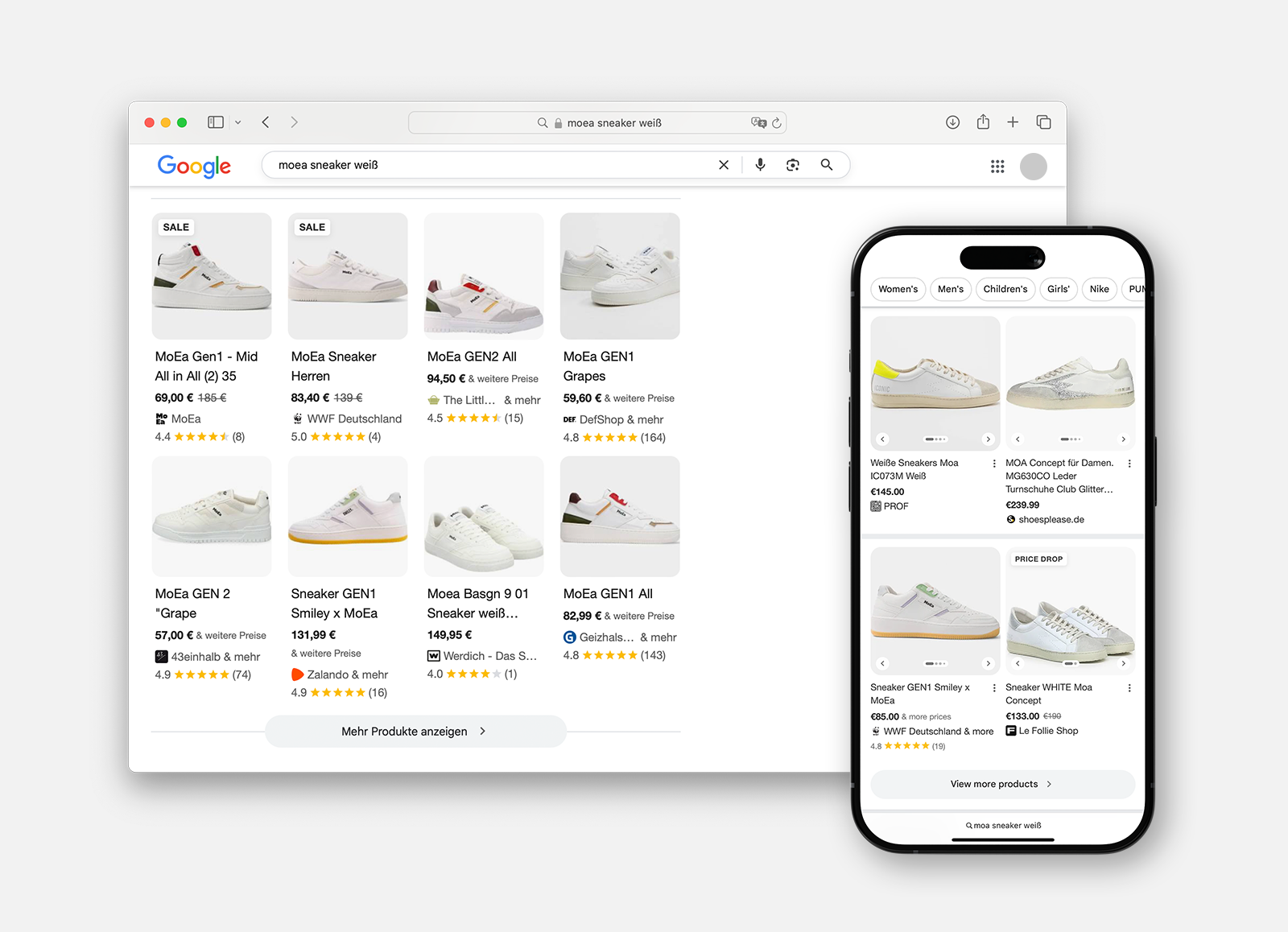
Product Listings (Google Shopping & Free Listings): Visual results featuring products sourced primarily from Google Merchant Center (GMCNext) and structured product data (product schema markup).
Local Pack: Highlighted section for geographically relevant searches, showing nearby businesses. It relies on Google Business Profile data (formerly Google My Business) and structured data (LocalBusiness schema).
Rich Results: Enhanced search listings that include additional structured information like reviews (star ratings), FAQs, pricing details, and availability—usually achieved through structured schema markup.
Google AI Overview Example
Why Structured Data Matters
To increase your eligibility of appearing in rich results in SERPs, implementing relevant structured data types for your brand is crucial. For E-Commerce, these can include:
Product (including Offer etc): Clearly presents product details such as price, availability, reviews, and ratings directly within search results.
Review: Enables your customer reviews and star ratings to prominently appear as rich results, boosting credibility and click-through rates.
FAQ: Enhances visibility by increasing your chances of appearing in Featured Snippets and "People Also Ask" sections.
HowTo: Perfect for capturing instructional and step-by-step search queries with visual-rich, structured content.
Carousel: Ideal for Category or Collections pages, allows E-Commerce websites to display multiple related products directly in a horizontally-scrollable carousel within search results
Breadcrumb: Improves navigation clarity within search results by displaying a clean hierarchy of pages.
Organization: Provides brand details (such as logo, social media profiles, contact information)
AI Overviews: what we've learned so far
AI Overviews primarily appear for top-of-funnel, informational searches and often reduce click-through rates (CTR) for both organic and paid listings. While only 5% of AIOs include the exact keyword that triggered them, this makes brand authority and content quality even more critical. AIO's are built based on Google's knowledge graph which is a database of entities, therefore having a strong web footprint can help Google to understand your entity. To stand out:
Optimise your content for clarity and structure.
Focus on recognised entities, such as authors or brand mentions.
Think beyond your website — ensure your entire digital footprint is solid, from LinkedIn to YouTube.
How Google Chooses AI Overview Sources
AI-powered features like Gemini favour brands and websites that demonstrate:
Well-structured and easy-to-navigate content (e.g., bullet points, clear headings).
Conversational and FAQ-rich formats.
Quality Score Badge: A Must for E-Commerce Success
For online retailers, achieving Google’s Top Quality Score Badge is a great way to increase the chances of ranking better in Free Listings. Google Merchant Center is now very much part of SEO strategy. Factors that determine whether your brand with be eligible for the Top Quality Score badge include:
Browsing experience: images, images per product, fast and seamless mobile and desktop browsing.
Strong customer reviews and high overall store ratings.
What Should Brands Prioritise?
Right now, E-Commerce brands should focus on three core areas:
Merchant Center Access: Make sure all clients have access to GMC, activate free product listings if not already, and ensure all of your shipping and returns data is filled out.
Brand Authority: Secure a Knowledge Panel, optimise social channels, and build recognition beyond your site.
Structured Data: Prioritise Organisation, WebSite, Carousel, Product, and FAQ markup to increase eligibility for richer search features. We've seen a direct correlation between updating Organization structured data and having more data added to the Knowledge Panel for your clients' brands.
We are learning as we go and it is still unclear how organic search will evolve this year, but we continue to test and learn to find solutions that work.
From audits no one implements to tool overkill and perfectionism in the wrong places: The 7 most common budget killers in SEO projects – and how to protect your budget.
With Free Listings, Google offers free placement for products in search results. Investing early in data quality and presentation ensures visibility and qualified traffic – and thus a real competitive advantage.
Search results are changing with AI-powered results. Boost visibility by prioritising structured data, strengthening brand authority, optimising your Google Merchant Center, and securing Google's Top Quality Score Badge.